
Navigator International Global Construction Commitment to Quality and Compliance
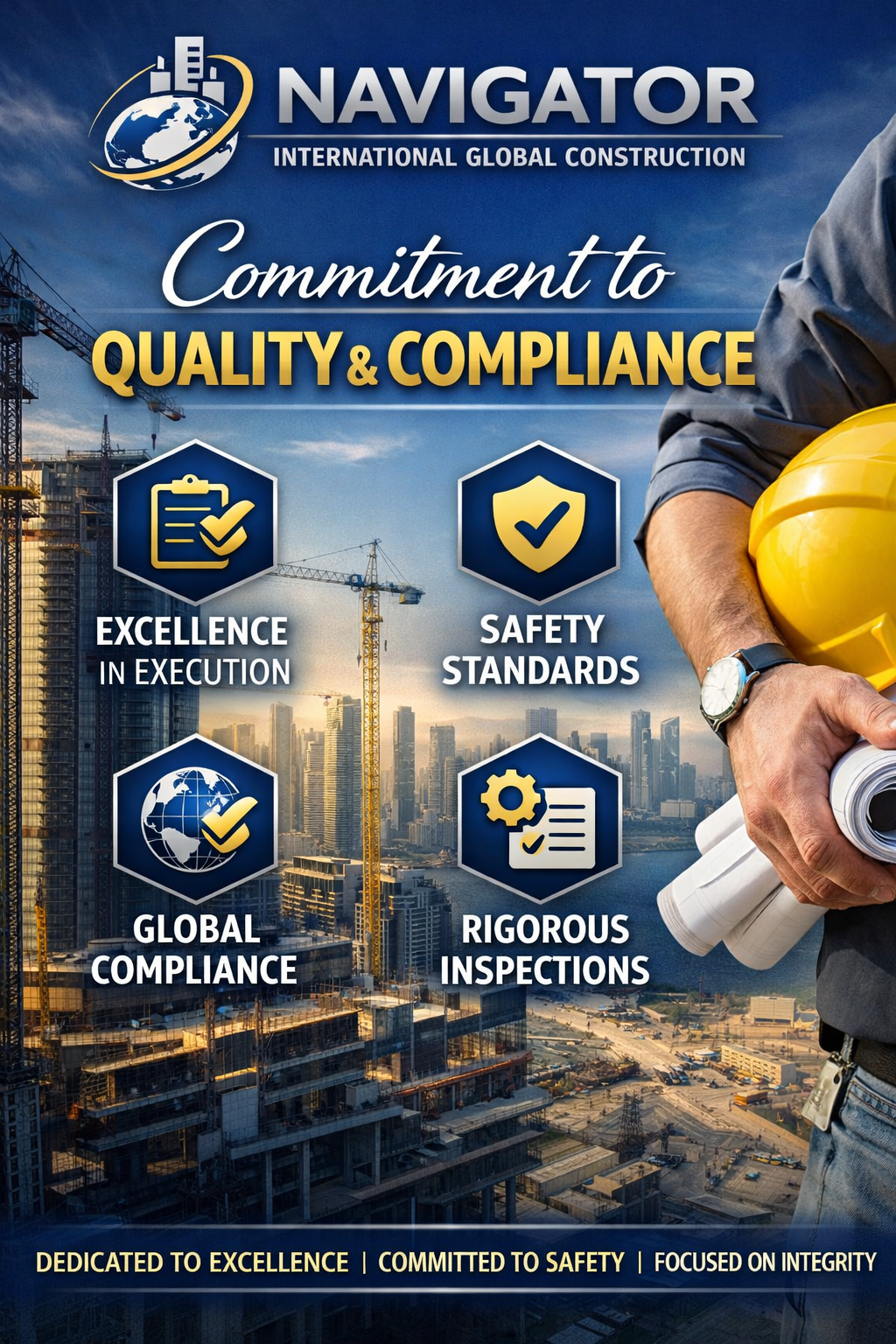
Precision in global construction is measured by how well every detail meets strict standards across different regions and conditions. Projects tied to government and defense work require more than skill; they demand consistent oversight and accountability. Navigator International Global Construction reflects this discipline through systems designed to deliver reliable results under complex requirements.
Global ISO Quality Management Certification Standards
Structured quality systems begin with internationally recognized certifications that guide how work is planned and executed. ISO standards establish consistent processes for documentation, performance tracking, and continuous improvement. Teams operating under Navigator International Construction Company follow these frameworks to maintain uniform quality across global projects.
Certification ensures that each phase meets defined benchmarks for reliability and efficiency. Standardized procedures reduce variation between sites and help maintain consistency regardless of location. These systems also support accountability by providing clear guidelines that align with international expectations for construction performance.
Adherence to International Building Codes (IBC) and Unified Facilities Criteria (UFC)
Building standards define how structures must perform under various conditions. The International Building Code and Unified Facilities Criteria provide detailed requirements for safety, durability, and functionality. Navigator International Government construction projects align with these codes to ensure that structures meet strict regulatory expectations.
Compliance includes proper design, material selection, and construction methods. Following these standards supports long-term performance and ensures compatibility with existing infrastructure. Consistent adherence helps prevent structural issues and ensures that each project meets both local and international requirements.
Strict Multi-Tiered Quality Assurance and Control (QA/QC) Systems
Quality assurance and control systems provide multiple checkpoints throughout the construction process. Each stage is reviewed to confirm that work meets specifications before moving forward. Navigator International Global Construction applies layered QA/QC procedures to identify and correct issues early.
Inspections, testing, and verification steps ensure that materials and workmanship meet required standards. Multi-tiered systems reduce the risk of errors and support consistent outcomes. This approach ensures that final results align with project requirements without the need for extensive rework.
Comprehensive Compliance with Federal Acquisition Regulation (FAR) Requirements
Federal projects operate under strict procurement and compliance rules. The Federal Acquisition Regulation outlines how contracts are managed, including cost controls, documentation, and reporting. Navigator International Construction Company follows these requirements to ensure transparency and accountability. Compliance with FAR ensures that all aspects of a project meet government expectations. Detailed tracking and reporting support oversight and audit readiness. Adhering to these regulations helps maintain trust and ensures that projects are completed within defined legal and operational frameworks.
Rigorous Material Testing and Field Inspection Protocols
Material performance directly impacts the durability and safety of a structure. Testing procedures verify that materials meet specified standards before and during installation. Field inspections confirm that construction practices align with design requirements. Navigator International Government construction projects include thorough testing to ensure that materials perform as expected under real conditions. Inspection protocols help identify potential issues before they affect the structure. Consistent testing and verification support long-term reliability and reduce the risk of failure in demanding environments.
Zero-Harm Safety and Occupational Health Management Systems
Worksite safety requires structured systems that prioritize both prevention and response. Zero-harm approaches focus on eliminating risks through training, planning, and supervision. Navigator International Global Construction projects implement safety programs designed to protect personnel and equipment. Clear procedures guide how tasks are performed to reduce the likelihood of accidents. Health management systems also address environmental conditions and worker well-being. Maintaining a strong safety culture supports continuous operation and reflects a commitment to responsible construction practices.
Continuous Performance Monitoring and Reporting Mechanisms
Ongoing monitoring ensures that projects remain aligned with performance goals. Data collected throughout construction provides insight into progress, efficiency, and compliance. Navigator International Construction Company uses reporting systems to track key metrics and identify trends. Regular updates allow teams to address issues quickly and maintain project timelines. Performance monitoring supports informed decision-making and helps ensure that each phase meets expectations. Transparent reporting also provides stakeholders with clear visibility into project status and outcomes.
Strategic Risk Mitigation in High-Security Global Environments
Operating in high-security environments requires careful planning to manage potential risks. Projects may face challenges related to location, logistics, or security requirements. Navigator International Government construction incorporates risk mitigation strategies to address these factors. Planning includes identifying potential threats and implementing measures to reduce their impact. Flexible approaches allow teams to adapt to changing conditions while maintaining project integrity. Effective risk management ensures that construction continues safely and efficiently in complex environments.
Ethical Sourcing and Sustainable Procurement Standards
Material sourcing plays a role in both project quality and environmental responsibility. Ethical procurement ensures that materials meet standards for performance while supporting responsible supply chains. Navigator International Global Construction incorporates sustainability into procurement practices by selecting materials that align with environmental guidelines. Responsible sourcing helps reduce environmental impact and supports long-term project sustainability. Procurement standards also ensure that materials meet required specifications for durability and performance. This approach reflects a commitment to quality that extends beyond construction itself.
Projects with strict requirements often depend on Navigator International to meet high expectations for quality and compliance. Their team applies structured systems, proven processes, and careful supervision to ensure consistent outcomes. Through adherence to global codes, federal guidelines, and ethical standards, Navigator International supports construction efforts that require precision and dependable performance in challenging environments.
For more articles visit: Desktopfeed